Brand
Getty-Dubay
Getty-Dubay® is a homeschool handwriting program built on the italic method, created in the late 1970s by calligraphers Barbara Getty and Inga Dubay in Portland, Oregon. Books A through G run from kindergarten through sixth grade, and the same letter shapes take a child from first printing through joined cursive. More about Getty-Dubay
- Grades K–6
Handwriting · Grades K–6
Getty-Dubay Italic Handwriting Series
Italic letters keep their shape from print into cursive, so children join the alphabet they already write by adding entrance and exit strokes.
- 1
Book AKindergarten
Getty-Dubay® Italic Handwriting Series Book A1 item for this level
$10.85 - 2
Book BGrade 1
Getty-Dubay® Italic Handwriting Series Book BBackordered: order now, ships when it arrives1 item for this level
$10.85 - 3
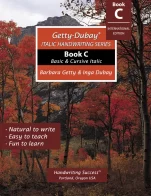
Book CGrade 2
Getty-Dubay® Italic Handwriting Series Book C1 item for this level
$10.85 - 4
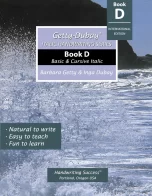
Book DGrade 3
Getty-Dubay® Italic Handwriting Series Book D1 item for this level
$10.85 - 5
Book EGrade 4
Getty-Dubay® Italic Handwriting Series Book E1 item for this level
$10.85
Show all 7 levelsShow fewer levels
- 6
Book FGrade 5
Getty-Dubay® Italic Handwriting Series Book F1 item for this level
$10.85 - 7
Book GGrade 6
Getty-Dubay® Italic Handwriting Series Book G1 item for this level
$10.85
Everything from Getty-Dubay
8 products






Nothing matches all of those filters.
Try removing one, or let us help.
About Getty-Dubay
In the Getty-Dubay italic system, the print letterforms already have the correct slant and shape. Cursive starts in Book C, typically second grade, where students add entrance strokes, exit strokes and joins. The letters themselves stay the same, so a child moves into cursive with shapes they already write.
Getty and Dubay handwrote the workbooks themselves, so students see exactly the letterforms they are learning to write. Letters are taught in families, groups that share similar strokes. A built-in self-assessment method lets students work through a page on their own, and the usual pace is one page a day, which takes a few minutes.
The italic style has roots in the Italian Renaissance. Its clean letters are free of loops and are meant to stay legible when a child writes quickly.