Curriculum · Math
Art of Problem Solving
Each section opens with problems a student tries unaided, then the text works through the solutions to explain the method.
- Grades 6–12
- More from Art of Problem Solving
Not sure which level? See Art of Problem Solving's placement guide (on their website)
Part of Art of Problem Solving Math 1–12. Follow it from one to the next:
- Beast Academy 1–5
- Art of Problem Solving 6–12
Choose a level
Grades are a guide. Not sure? Ask us what to buy.
Grade and level don’t always match. Choose by what your child is working on now.
- Properties of arithmetic, exponents, primes and divisors, fractions, equations, decimals, percents, geometry, statistics and probability. It builds toward middle school contests such as MATHCOUNTS. The first step after Beast Academy.Prealgebra · Grades 6–9
- Linear equations, ratios, quadratics, special factorizations, complex numbers, graphing, inequalities, functions, polynomials, exponents and logarithms, and sequences and series; the publisher places it in grades 6 to 9.Introduction to Algebra · Grades 6–9
- Permutations, combinations, Pascal's Triangle and the basics of probability, for students who can already solve linear equations; the publisher places it in grades 7 to 10.Introduction to Counting & Probability · Grades 7–10
- Similar and congruent triangles, quadrilaterals, polygons, circles and areas; the publisher calls it the most challenging of the Introduction books and places it in grades 7 to 10.Introduction to Geometry · Grades 7–10
- Primes and composites, multiples and divisors, prime factorization, number bases, modular arithmetic, divisibility rules and linear congruences, for students who can already solve linear equations; grades 7 to 10.Introduction to Number Theory · Grades 7–10
- The follow-up to Introduction to Algebra: complex numbers, quadratics and conic sections, sequences and series, identities, inequalities, exponents and logarithms, and functional equations. It comes before Precalculus.Intermediate Algebra · Grades 8–11
- Inclusion-exclusion, one-to-one correspondences, the Pigeonhole Principle, recursion, conditional probability, generating functions and graph theory; grades 9 to 12, at any point after Intermediate Algebra.Intermediate Counting & Probability · Grades 9–12
- Trigonometry, complex numbers, vectors and matrices; it follows Intermediate Algebra and comes before Calculus.Precalculus · Grades 10–12
- Limits, continuity, derivatives, integrals, power series, plane curves and differential equations, after Precalculus.Calculus · Grades 9–12
Grades 6–9Prealgebra
Properties of arithmetic, exponents, primes and divisors, fractions, equations, decimals, percents, geometry, statistics and probability. It builds toward middle school contests such as MATHCOUNTS. The first step after Beast Academy.Set $59.00
Buy it as a set
- Set
AoPS PreAlgebra Set
Has Prealgebra Solutions Manual and Prealgebra.
Saves $9.00 over its 2 parts bought separately.
$59.00

Or buy the books one by one
- Student
AoPS Prealgebra
$56.00 - $12.00


About this level: Properties of arithmetic, exponents, primes and divisors, fractions, equations, decimals, percents, geometry, statistics and probability. It builds toward middle school contests such as MATHCOUNTS. The first step after Beast Academy.
Ready for more? Introduction to Algebra (grades 6–9) comes next.
Grades 6–9Introduction to Algebra
Linear equations, ratios, quadratics, special factorizations, complex numbers, graphing, inequalities, functions, polynomials, exponents and logarithms, and sequences and series; the publisher places it in grades 6 to 9.Set $67.00
Buy it as a set
- Set
AoPS Introduction to Algebra Set
Has Algebra and Algebra Solutions Manual.
Saves $7.00 over its 2 parts bought separately.
$67.00

Or buy the books one by one
- Student
AoPS Introduction to Algebra
$60.00 - $14.00


About this level: Linear equations, ratios, quadratics, special factorizations, complex numbers, graphing, inequalities, functions, polynomials, exponents and logarithms, and sequences and series; the publisher places it in grades 6 to 9.
Need to start earlier? Prealgebra (grades 6–9) comes before. Ready for more? Introduction to Counting & Probability (grades 7–10) comes next.
Grades 7–10Introduction to Counting & Probability
Permutations, combinations, Pascal's Triangle and the basics of probability, for students who can already solve linear equations; the publisher places it in grades 7 to 10.Set $49.00
Buy it as a set
- Set
AoPS Introduction to Counting & Probability Set
Has Probability and Probability Solutions Manual.
Saves $6.00 over its 2 parts bought separately.
$49.00

Or buy the books one by one
- $44.00
- $11.00


About this level: Permutations, combinations, Pascal's Triangle and the basics of probability, for students who can already solve linear equations; the publisher places it in grades 7 to 10.
Need to start earlier? Introduction to Algebra (grades 6–9) comes before. Ready for more? Introduction to Geometry (grades 7–10) comes next.
Grades 7–10Introduction to Geometry
Similar and congruent triangles, quadrilaterals, polygons, circles and areas; the publisher calls it the most challenging of the Introduction books and places it in grades 7 to 10.Set $65.00
Buy it as a set
- Set
AoPS Introduction to Geometry Set
Has Geometry and Geometry Solutions Manual.
Saves $8.00 over its 2 parts bought separately.
$65.00

Or buy the books one by one
- $58.00
- $15.00


About this level: Similar and congruent triangles, quadrilaterals, polygons, circles and areas; the publisher calls it the most challenging of the Introduction books and places it in grades 7 to 10.
Need to start earlier? Introduction to Counting & Probability (grades 7–10) comes before. Ready for more? Introduction to Number Theory (grades 7–10) comes next.
Grades 7–10Introduction to Number Theory
Primes and composites, multiples and divisors, prime factorization, number bases, modular arithmetic, divisibility rules and linear congruences, for students who can already solve linear equations; grades 7 to 10.Set $55.00
Buy it as a set
- Set
AoPS Introduction to Number Theory Set
Has Theory and Theory Solutions Manual.
Saves $5.00 over its 2 parts bought separately.
$55.00

Or buy the books one by one
- $49.00
- $11.00


About this level: Primes and composites, multiples and divisors, prime factorization, number bases, modular arithmetic, divisibility rules and linear congruences, for students who can already solve linear equations; grades 7 to 10.
Need to start earlier? Introduction to Geometry (grades 7–10) comes before. Ready for more? Intermediate Algebra (grades 8–11) comes next.
Grades 8–11Intermediate Algebra
The follow-up to Introduction to Algebra: complex numbers, quadratics and conic sections, sequences and series, identities, inequalities, exponents and logarithms, and functional equations. It comes before Precalculus.Set $74.00
Buy it as a set
- Set
AoPS Intermediate Algebra Set
Has Algebra and Algebra Solutions Manual.
Saves $7.00 over its 2 parts bought separately.
$74.00

Or buy the books one by one
- Student
AoPS Intermediate Algebra
$68.00 - $13.00


About this level: The follow-up to Introduction to Algebra: complex numbers, quadratics and conic sections, sequences and series, identities, inequalities, exponents and logarithms, and functional equations. It comes before Precalculus.
Need to start earlier? Introduction to Number Theory (grades 7–10) comes before. Ready for more? Intermediate Counting & Probability (grades 9–12) comes next.
Grades 9–12Intermediate Counting & Probability
Inclusion-exclusion, one-to-one correspondences, the Pigeonhole Principle, recursion, conditional probability, generating functions and graph theory; grades 9 to 12, at any point after Intermediate Algebra.Set $56.00
Buy it as a set
- Set
AoPS Intermediate Counting & Probability Set
Has Probability and Probability Solutions Manual.
Saves $6.00 over its 2 parts bought separately.
$56.00

Or buy the books one by one
- $49.00
- $13.00


About this level: Inclusion-exclusion, one-to-one correspondences, the Pigeonhole Principle, recursion, conditional probability, generating functions and graph theory; grades 9 to 12, at any point after Intermediate Algebra.
Need to start earlier? Intermediate Algebra (grades 8–11) comes before. Ready for more? Precalculus (grades 10–12) comes next.
Grades 10–12Precalculus
Trigonometry, complex numbers, vectors and matrices; it follows Intermediate Algebra and comes before Calculus.Set $62.00
Buy it as a set
- Set
AoPS Precalculus Set
Has Precalculus and Precalculus Solutions Manual.
Saves $6.00 over its 2 parts bought separately.
$62.00

Or buy the books one by one
- Student
AoPS Precalculus
$55.00 - $13.00


About this level: Trigonometry, complex numbers, vectors and matrices; it follows Intermediate Algebra and comes before Calculus.
Need to start earlier? Intermediate Counting & Probability (grades 9–12) comes before. Ready for more? Calculus (grades 9–12) comes next.
Grades 9–12Calculus
Limits, continuity, derivatives, integrals, power series, plane curves and differential equations, after Precalculus.Set $59.00
Buy it as a set
- $59.00

Or buy the books one by one
- Student
AoPS Calculus
$52.00 - $11.00
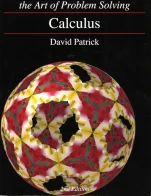

About this level: Limits, continuity, derivatives, integrals, power series, plane curves and differential equations, after Precalculus.
Need to start earlier? Precalculus (grades 10–12) comes before.
About Art of Problem Solving
Art of Problem Solving's textbook series runs from Prealgebra through Calculus and asks students to solve first and read the explanation second. Every section starts with problems a student attempts without help. The text then works through their solutions. Each book holds hundreds of problems that build toward contests such as MATHCOUNTS, the AMC and the AIME, and its Solutions Manual works every problem in full. Prealgebra leads to the Introduction books in algebra, counting and probability, geometry and number theory, then to Intermediate Algebra, Intermediate Counting & Probability, Precalculus and Calculus.
Who it fits
- Worldview
- Faith-neutral
- Learning style
- Visual
- Parent involvement
- Independent